
A new outdoor park
Establish the audience, usable plot and essential guest facilities before committing to equipment.

Plan the whole park, not just the rides. Connect your audience, attraction mix and visitor journey to a practical route from concept to opening.
Four different starting points. One site-specific planning process.
Establish the audience, usable plot and essential guest facilities before committing to equipment.
Identify the missing experience and check existing foundations, circulation and utilities.
Agree how family, children’s and more intense attractions share the same visitor journey.
Separate the first operating phase from reserved land, future infrastructure and later attractions.
There is no universal minimum plot size. Ride envelopes, queues, guest facilities, access and local requirements determine the usable layout.
Explore what each attraction contributes before choosing the model.
Choose a visible centerpiece, then organize arrival and circulation around it. Confirm the actual observation experience and operating envelope for the model.
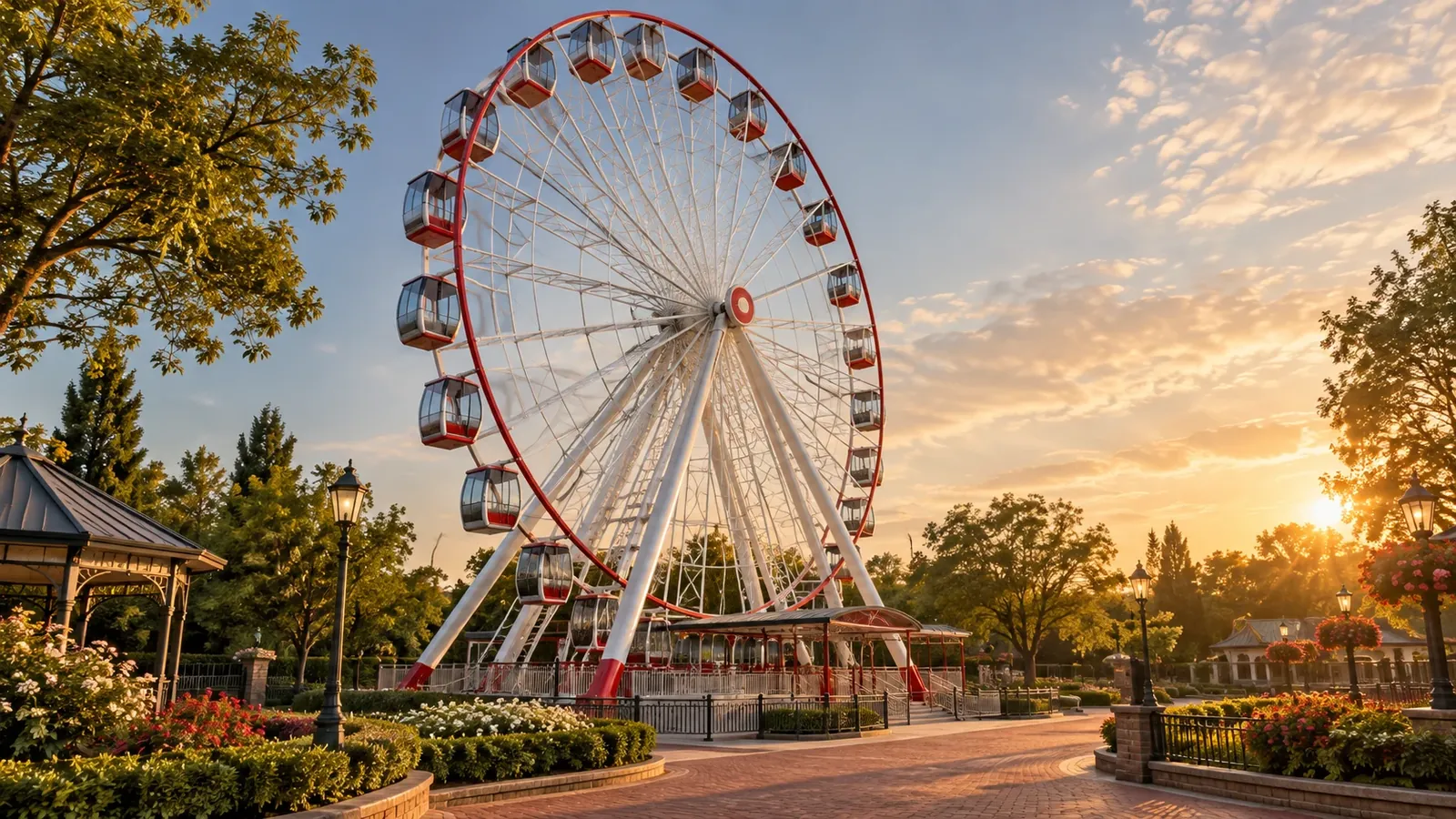

A thrill area needs more than a headline ride. Test the relationship between ride movement, waiting guests, noise-sensitive uses and maintenance access.

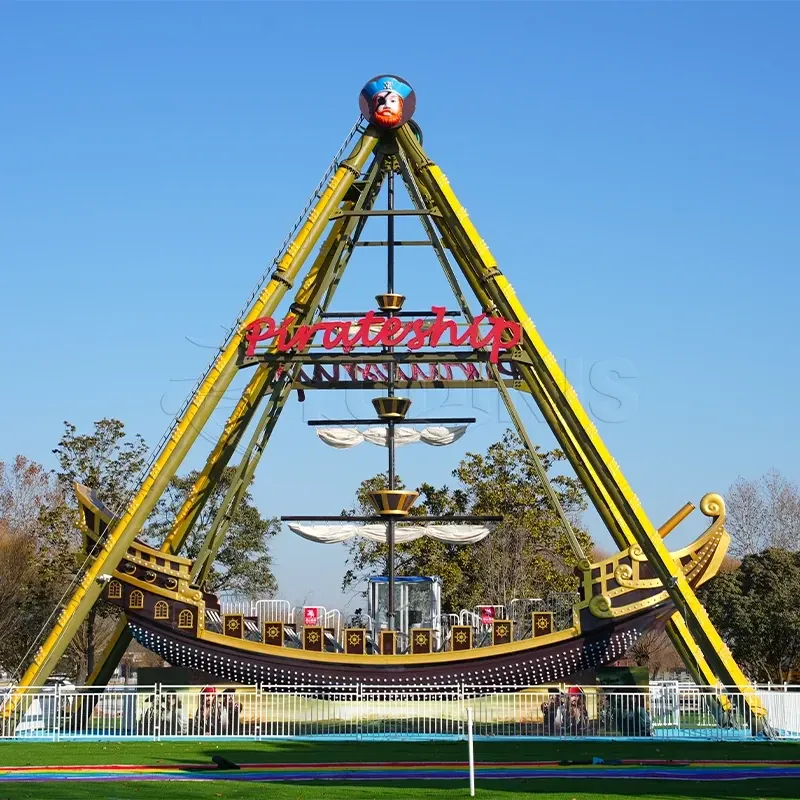
Use a mix of shared and child-oriented experiences rather than assuming every attraction serves every age. Model restrictions remain part of the selection.
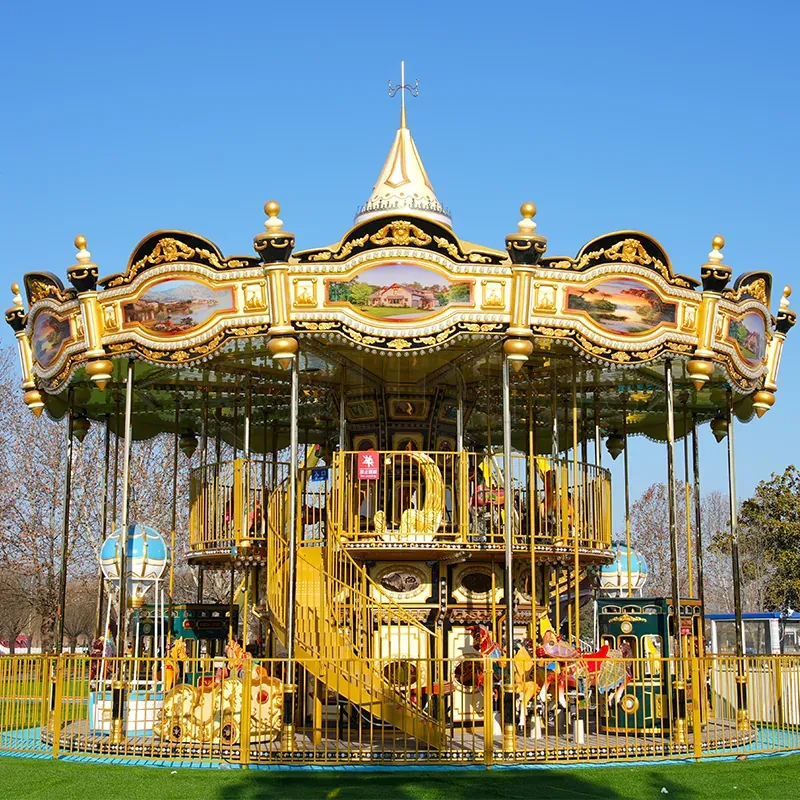

Smaller attractions can give a transition area its own identity. Their full operating space and supervision needs must still fit the circulation plan.


Assess track and road-based options against the measured route. Separate vehicles from pedestrians and define how guests board and leave at each stop.


Coordinate ride lighting with paths, landscape and operating hours. An attractive night scene is not a substitute for an approved electrical and operating plan.
Catalog examples illustrate the role, not a fixed package or a confirmed fit. Published fields stay attached to their exact models; missing data is not inferred from another ride.
Connect the visitor loop, support facilities and the land reserved for later phases.
An orientation point, a clear entrance sequence and a recognizable centerpiece.
Separate ride movement and queues from quieter guest areas.
Group appropriate experiences with rest, shade and supervision facilities.
Plan amenities as part of the guest route, not leftover space.
Review boarding areas, crossings and the relationship with pedestrian paths.
Reserve practical access for maintenance, emergency response and later works.
A good combination must work beyond the opening-day image.
Help guests understand where to go next.
Match intensity and restrictions to the audience.
Include shade, rest and convenient guest facilities.
Check staffing, inspections, utilities and service routes.
These are design objectives, not guaranteed attendance, guest spending or commercial returns.
The mix is resolved from the brief—not a universal list of ride quantities.
 Regional
For a local or regional audience seeking a manageable mix of shared experiences.
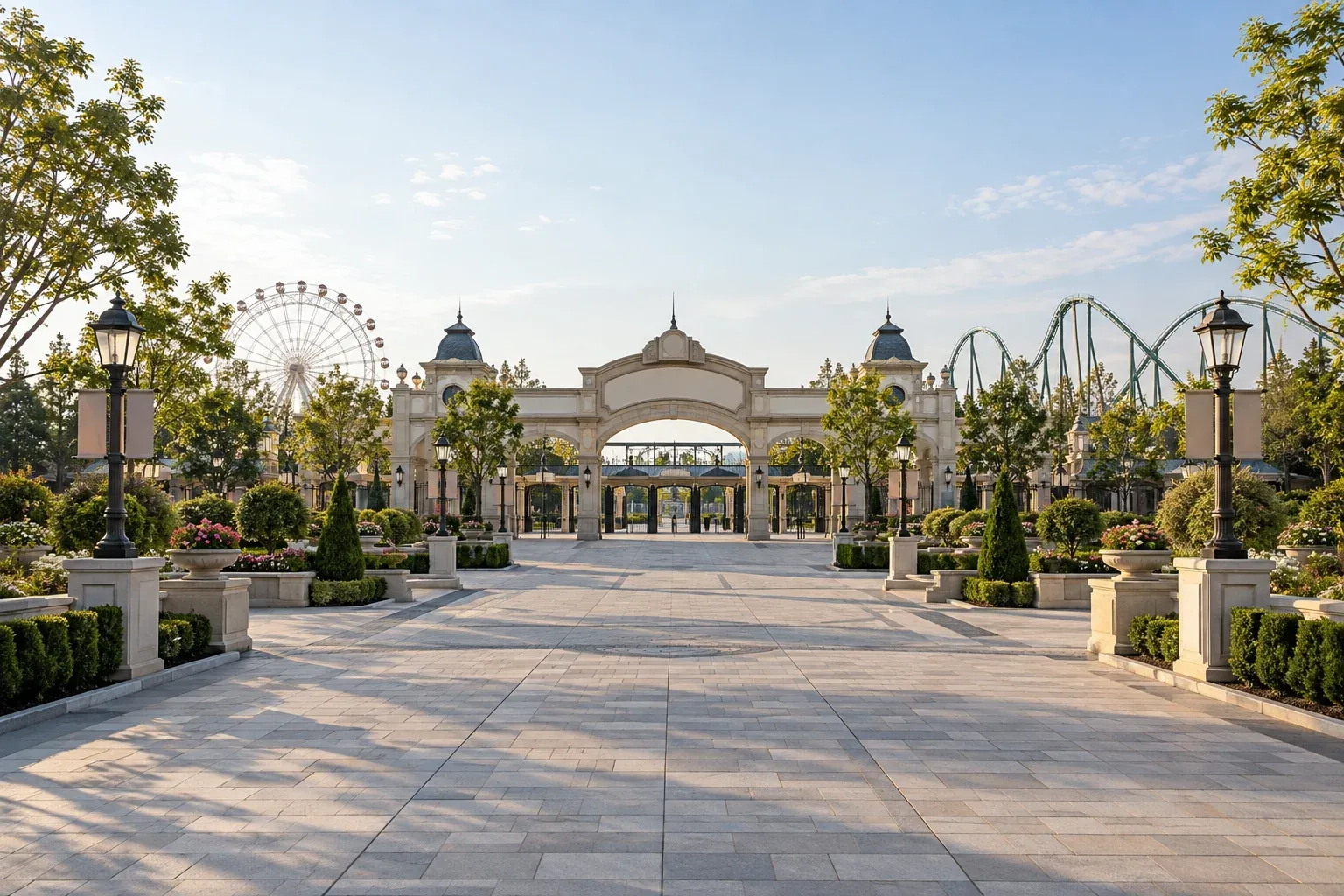 Destination
For a broader visitor journey linked to tourism, landscape or a larger development.
 Expansion
For an operator reviewing a missing guest experience or an underused area.
Transparent arithmetic. No hidden demand multiplier or promised payback.
Annual visits = average daily paying visitors × operating days. Gross revenue = annual visits × (ticket receipt + other revenue per visitor). Operating balance = gross revenue − the annual operating expense you entered. Revenue per m² = gross revenue ÷ usable plot area.
Site area does not predict attendance. The calculation excludes construction and equipment investment, financing, tax and depreciation. It is not a forecast, quote, feasibility assessment or investment recommendation. Revenue assumptions and commercial viability need independent local research.
Agree deliverables and acceptance checkpoints before moving into the next phase.
Identify measured land, audiences, access and opening objectives.
Discuss roles, routes, guest facilities and the first operating phase.
Confirm models, drawings, responsibilities and commercial boundaries.
Agree fabrication records, inspection checkpoints and dispatch readiness.
Coordinate transport, civil readiness, lifting and installation responsibilities.
Define acceptance, operator instruction, documents and service scope.
Connect the proposal to the evidence and responsibilities of the specific order.

Explore the factory process and discuss the drawings, inspections and workshop records relevant to your order.
Clarify the assumptions before choosing the equipment.
No. Usable land, setbacks, access and the proposed models determine the plan. A small plot and a destination-scale project need different attraction and operating briefs.
A list is only a starting point. Site conditions, rider restrictions, utilities and operating responsibilities must be reviewed before final selection.
Do not assume compatibility. The existing records, condition assessment and the new model’s loading and interface drawings must be reviewed together.
No. It only shows the arithmetic from the assumptions you enter. Demand, operating expenses, capital costs, local rules and commercial viability need independent investigation.
Send a measured plot plan, location, access and utility information, target audience, project stage and desired opening window. Include existing equipment records for an expansion.
Confirm the drawings, inspection evidence, transport, installation, commissioning, operator instruction and after-sales responsibilities in the agreed order scope.
Project conditions and scenario assumptions are attached only when you choose to include them.
Tell us your requirements and how to reach you. We include this page's topic with your message.